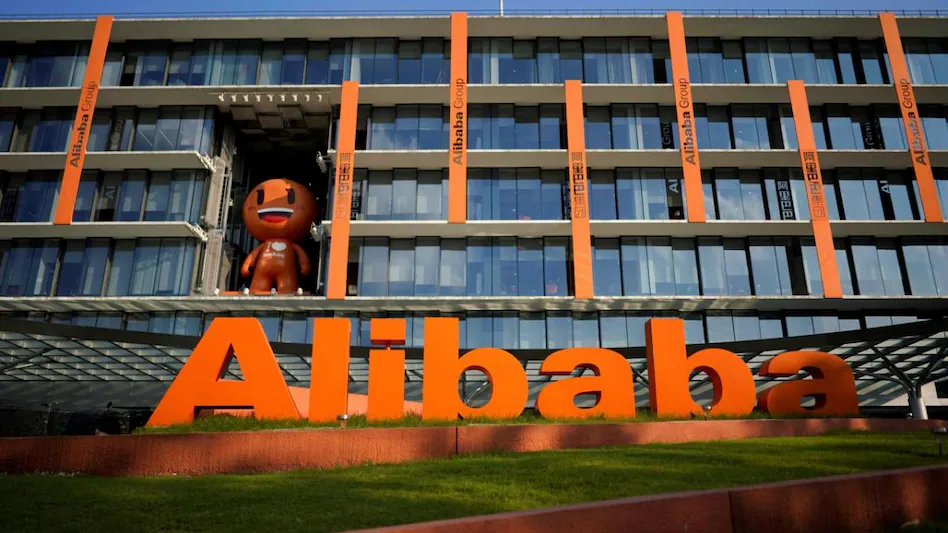
Alibaba has secured an important legal victory in the United States after a federal judge temporarily stopped the Pentagon from applying new lobbying restrictions tied to the company’s designation as a Chinese military-linked entity. The ruling does not remove Alibaba from the Defense Department’s list, but it gives the Chinese technology giant temporary relief while a court considers whether the government’s decision was legally justified. The case could have wider implications for other companies that are placed on the same list in the future.
The dispute centers on the Pentagon’s so-called 1260H entity list, which identifies companies the US Department of Defense believes have links to China’s military. Unlike economic sanctions that completely block business activities, the list carries a different set of restrictions that have become more significant following recent changes in US law.
Why Alibaba Took the US Government to Court
Alibaba filed a lawsuit against the US government after being added to the Pentagon’s 1260H list, arguing that the designation lacked both factual and legal justification. The company maintains that it has no relationship with the Chinese military and says the government’s decision violated its constitutional rights, including due process protections and freedom of speech. According to Alibaba, the designation has caused serious damage beyond its reputation by limiting its ability to communicate with US policymakers.
A major concern for the company involves a recently introduced lobbying restriction. Under the updated rule, the US Department of Defense is prohibited from entering into contracts with companies that employ lobbyists or lobbying firms representing businesses listed under the 1260H designation. Alibaba argues that the rule effectively prevents it from hiring professional representation that could help defend its interests before the US government.
The company also told the court that the restriction has already had a direct impact on its operations in Washington. According to its filing, more than two dozen registered lobbyists representing Alibaba withdrew their registrations after the company was placed on the Pentagon’s list. Alibaba argued that the restriction has stripped away “its voice across the whole of its dealings with the federal government — on legislation, on regulation, on the policies that shape its business.”
Judge Grants Temporary Relief While Case Continues
US District Judge Eumi K. Lee has now issued a temporary order preventing the Pentagon from treating Alibaba as a Chinese military company solely for the purpose of enforcing the new lobbying restriction. The order will remain in place until the court rules on Alibaba’s request or for 60 days after a hearing on the matter, whichever occurs first. While the ruling is temporary, it provides Alibaba with an opportunity to continue challenging the government’s designation without immediately facing the full effect of the lobbying rule.
The Pentagon did not concede Alibaba’s legal arguments but acknowledged that temporarily pausing enforcement would allow the court to fully examine the issues raised in the lawsuit. Government lawyers maintained that they believe the lobbying restriction is constitutional, while agreeing that a short delay would benefit both sides as the legal proceedings move forward.
Legal experts are watching the case closely because the outcome could influence how future challenges to the Pentagon’s 1260H list are handled. If Alibaba ultimately succeeds, companies added to the list may have stronger grounds to contest restrictions linked to their designation.
What the Case Means for US-China Technology Tensions
The legal battle arrives at a time when relations between the United States and China remain strained, particularly in areas involving technology, trade, and national security. Washington has increased scrutiny of Chinese technology companies in recent years, arguing that some firms could support Beijing’s military or strategic objectives. Chinese companies, meanwhile, have repeatedly denied such allegations and accused US authorities of unfairly targeting their businesses.
The lobbying restrictions have also become a political issue in Washington. Members of the US House Select Committee on China recently urged Defense Secretary Pete Hegseth to strictly enforce the new rule. In a letter, Representatives John Moolenaar and Elise Stefanik argued that “It is critical that the Department’s contractors avoid partnering with firms and lobbyists that simultaneously advance the interests of companies executing the military ambitions of the Chinese Communist Party.”
For now, Alibaba remains on the Pentagon’s 1260H list, and the court has not ruled on whether that designation should ultimately be removed. The current order only pauses enforcement of one specific restriction while the lawsuit proceeds. A final decision in the coming weeks or months could shape not only Alibaba’s future dealings with the US government but also the legal framework surrounding other companies facing similar national security designations.