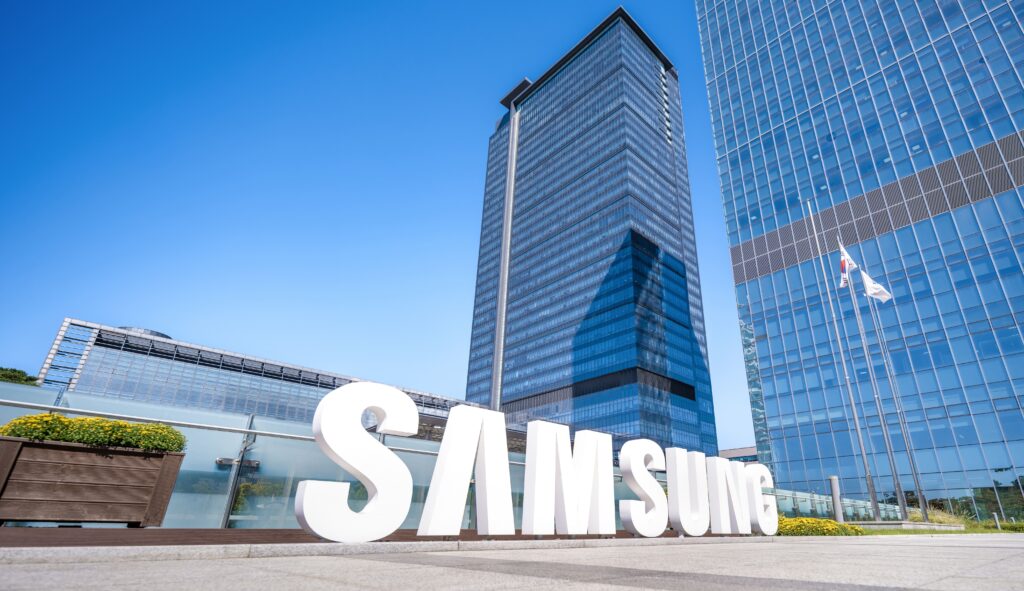
Samsung Electronics is expected to deliver another blockbuster earnings report as soaring demand for artificial intelligence hardware continues to reshape the global semiconductor industry. The South Korean technology giant is projected to report its third consecutive record operating profit, driven by an ongoing shortage of memory chips and rapidly rising prices across the market. While the AI boom continues to generate massive revenue for chipmakers, investors will also be watching whether higher employee bonuses and increasing production costs begin to weigh on earnings.
The company is scheduled to release preliminary second-quarter earnings on Tuesday, with analysts forecasting one of the strongest performances in Samsung’s history. The results are expected to reinforce how central memory chips have become to the global AI race as cloud providers and technology companies continue expanding their data center infrastructure at an aggressive pace.
AI Memory Demand Keeps Samsung’s Chip Business Running Hot
According to analyst estimates, Samsung is expected to report operating profit of around 86 trillion won (approximately $56.3 billion) for the April-to-June quarter. That would represent an extraordinary jump from 4.7 trillion won reported during the same period last year, reflecting the dramatic turnaround created by the artificial intelligence investment cycle. If those estimates are met, Samsung will record its third straight quarter of all-time high operating profit.
The biggest driver behind the earnings surge is the continued shortage of memory chips worldwide. Demand for High-Bandwidth Memory (HBM), which powers advanced AI processors, remains exceptionally strong as companies race to build larger AI infrastructure. At the same time, traditional DRAM and NAND memory products are also seeing robust demand because newer AI systems require significantly greater memory capacity and faster storage than previous generations of computing.
The rapid rise of agentic AI is adding another layer of demand across the semiconductor market. Unlike earlier AI models that mainly focused on training massive language models, agentic AI systems perform complex multi-step reasoning and decision-making tasks. Those workloads require larger memory pools, faster data processing, and increased storage capacity, creating stronger demand across nearly every segment of the memory industry.
Samsung continues to benefit from its position as one of the world’s largest suppliers of memory chips used by leading technology companies, including NVIDIA, Google, and Apple. Market researchers estimate average DRAM prices climbed roughly 44% during the second quarter, while NAND flash prices jumped around 53%, allowing memory manufacturers to significantly improve profitability despite rising manufacturing expenses.
Rising Costs Could Slightly Temper Record Earnings
Despite the exceptionally strong business environment, analysts believe Samsung’s final earnings could still vary depending on how the company accounts for employee compensation. Earlier this year, Samsung reached a wage agreement with its semiconductor workforce, avoiding a large-scale strike after negotiations concluded successfully. Under the new agreement, employees in the semiconductor division are entitled to receive special bonuses linked directly to operating profit.
Some analysts estimate Samsung may need to recognize more than 40 trillion won in cumulative bonus provisions. If a significant portion of those expenses is recorded during the second quarter, reported earnings could come in slightly below current market expectations despite exceptionally strong operating performance. Investors are therefore expected to pay close attention not only to revenue growth but also to how those bonus expenses are reflected in the financial statements released later this month.
Outside the semiconductor business, Samsung’s smartphone division is also facing growing pressure. Memory chip prices have risen so rapidly that component costs are increasing faster than the company can offset through higher smartphone prices. Although Samsung has already adjusted pricing for some devices, analysts believe additional price increases may become necessary during the second half of the year if memory costs continue climbing.
AI Spending Will Decide Samsung’s Next Growth Phase
While the current outlook remains highly positive, market experts believe the biggest uncertainty lies in future AI infrastructure spending. Cloud service providers are investing enormous amounts into building AI data centers, and memory chips now account for a growing share of those capital expenditures. Some investment firms are beginning to question whether that pace of spending can continue indefinitely without slowing.
Samsung and fellow South Korean chipmaker SK Hynix recently announced massive long-term investments to expand semiconductor production capacity, reflecting confidence that AI demand will remain elevated for years. Samsung alone plans to invest trillions of won into expanding chip manufacturing through 2040, while the South Korean government is also backing an ambitious national semiconductor strategy aimed at strengthening the country’s leadership in advanced chip production.
At the same time, analysts expect memory prices to remain strong well into next year because supply continues to lag behind demand. Forecasts suggest both DRAM and NAND prices could rise again during the current quarter as demand expands across AI servers, cloud computing infrastructure, enterprise storage, smartphones, and personal computers. Samsung has also secured multi-year supply agreements with several major customers, providing additional visibility into future sales even though the company has not publicly disclosed those contracts.
For investors, Samsung’s upcoming earnings report will provide another important snapshot of the AI economy. If the company once again delivers record-breaking profits, it would further confirm that memory chips remain one of the biggest beneficiaries of the global artificial intelligence boom. However, the months ahead will also test whether AI infrastructure investment can maintain its extraordinary pace, making future demand just as important as Samsung’s latest financial results.