For a company that’s usually all about bold promises and future-forward vision, SpaceX just showed a very different side of itself. In its pre-IPO filing, the company has quietly laid out a long list of risks — and honestly, some of them hit right at the core of what Elon Musk has been pitching for years.
The headline idea sounds massive: AI data centers in space, industries on the Moon, and eventually human life on Mars. But inside the filing, the tone shifts. Instead of certainty, there’s a lot of “early stage,” “unproven,” and “may not work.”
And that contrast stands out.
According to the document, SpaceX admits that its plans for orbital AI infrastructure and interplanetary expansion are still experimental. These aren’t systems ready to scale — they’re concepts being tested in one of the harshest environments imaginable. Space, as the filing puts it, isn’t just difficult… it’s unpredictable enough to make entire systems fail.
That’s a big reality check.
Because publicly, Musk has been saying the opposite. Earlier this year, he called space-based AI a “no-brainer,” even suggesting it could become the cheapest and most efficient way to run AI systems within a few years. He doubled down after linking SpaceX with xAI, positioning space as the future backbone of large-scale computing.
But filings like this don’t sell dreams. They list risks.
And one of the biggest risks mentioned is something SpaceX already depends on heavily — the Starship.
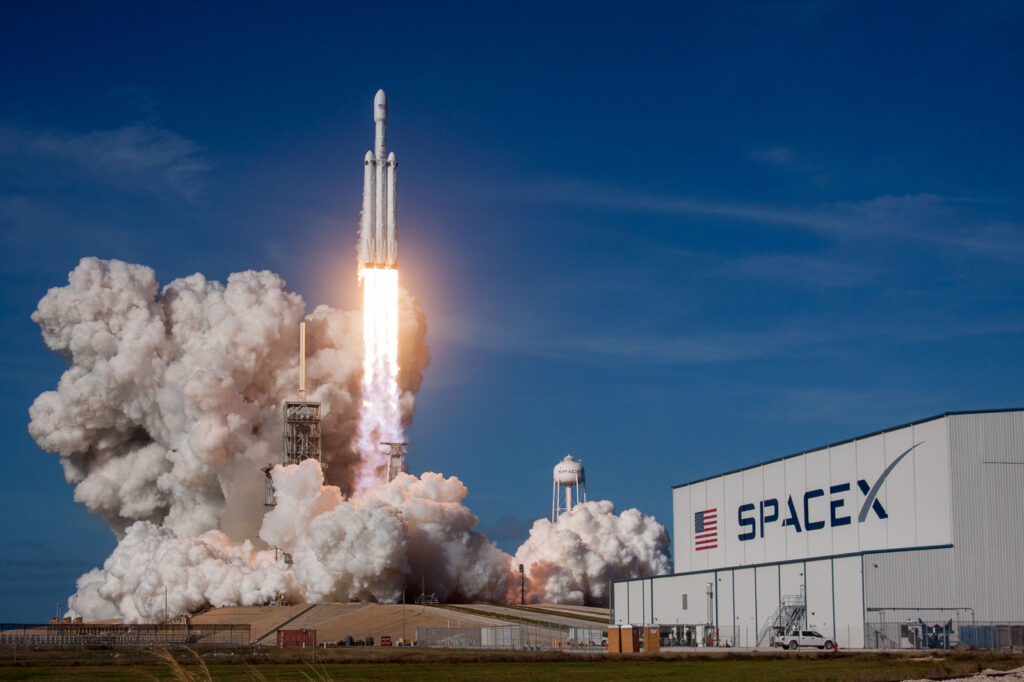
Starship is supposed to be the game-changer. A fully reusable rocket capable of carrying massive payloads — satellites, infrastructure, even humans — at a fraction of current costs. It’s central to almost everything SpaceX wants to do next.
But there’s a catch.
The rocket is still facing delays and test failures. And the company admits that if Starship doesn’t scale as planned — or worse, keeps getting delayed — it could slow down or even limit their entire growth strategy.
That’s not a small dependency. That’s the backbone.
There’s also the financial angle. SpaceX has been pouring serious money into AI infrastructure, but compared to tech giants like Meta, it’s still playing catch-up. Building data centers in space might sound futuristic, but it also means competing with companies already dominating AI on Earth.
And doing it in a much harder environment.
All of this is coming out as SpaceX prepares for what could be the biggest IPO ever — reportedly targeting a valuation of around $1.75 trillion and aiming to raise $75 billion. Those numbers are huge, even by today’s standards.
Which makes this filing even more important.
Because while the public narrative is about scaling humanity beyond Earth, the investor-facing version is more grounded: things might take longer, cost more, or not work the way they’re supposed to.
That doesn’t mean the vision is off the table.
It just means the path to get there is far less certain than it sounds on stage.
And right now, SpaceX is making sure investors know exactly that.