SpaceX added another chapter to its increasingly routine yet still remarkable launch streak this week. A Falcon 9 rocket lifted off from California carrying 24 new Starlink satellites, helping the company push its orbital internet network beyond a major milestone. But hidden beneath the familiar mission profile was a story about engineering endurance, record-breaking hardware, and a company preparing for one of its biggest financial moments.
The June 11 mission may not have grabbed headlines in the same way as a Starship test flight, but it quietly highlighted just how far SpaceX’s launch machine has evolved. What once sounded impossible — reusing rockets dozens of times and operating a constellation of more than 10,000 satellites — is now becoming part of the company’s regular rhythm.
Falcon 9 Delivers Another Successful Starlink Mission
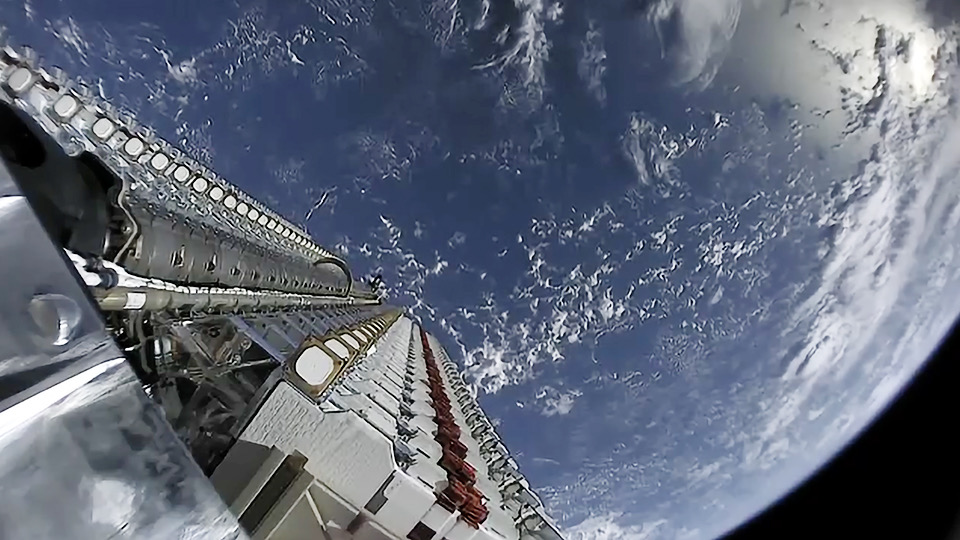
Launching from Vandenberg Space Force Base in California at 11:05 a.m. EDT, the Falcon 9 rocket carried 24 Starlink satellites into low-Earth orbit as part of the mission designated Group 17-44. SpaceX confirmed mission success less than an hour after liftoff, with all satellites deployed as planned.
For the average observer, another Starlink launch can easily blend into the long list of SpaceX missions that seem to happen every week. Yet this particular flight marked a significant milestone for the company’s ambitious satellite internet program.
With the addition of these 24 spacecraft, the Starlink constellation has now grown to more than 10,600 active satellites, making it by far the largest satellite network ever assembled. The scale is staggering when compared with traditional satellite operators, many of which manage fleets numbering in the dozens rather than the thousands.
The growing constellation is central to SpaceX’s vision of delivering high-speed internet access to underserved and remote communities across the globe. By placing satellites in different orbital shells, the company aims to improve coverage, reduce latency, and increase network capacity as demand for the service continues to rise.
Booster B1071 Is Closing In on Falcon 9 History
As impressive as the satellite milestone is, rocket enthusiasts had another reason to pay close attention to this launch.
The mission used Falcon 9 first-stage booster B1071, one of SpaceX’s veteran workhorses. The flight marked the booster’s 34th journey to space, bringing it within touching distance of a record that many once thought impossible to achieve.
After completing its job of carrying the upper stage toward orbit, B1071 separated from the rocket and began its carefully choreographed return to Earth. Descending through the atmosphere, the booster executed a controlled landing aboard the autonomous droneship “Of Course I Still Love You,” stationed in the Pacific Ocean.
That successful recovery moved B1071 just one flight away from matching the Falcon 9 reuse record currently held by booster B1067.
B1067 set the benchmark earlier this month with its 35th launch and landing, demonstrating how dramatically SpaceX has transformed rocket economics over the past decade. Reusability was once treated as an ambitious experiment. Today, it’s become the foundation of the company’s business model.
Each additional flight extends the life of hardware that would previously have been discarded after a single mission. The approach significantly lowers launch costs, increases mission frequency, and allows SpaceX to maintain an operational pace that few competitors can match.
If B1071 flies successfully again, it could soon stand alongside B1067 in Falcon 9 history.
Why the 10,600-Satellite Milestone Matters
Crossing the 10,600-satellite mark isn’t merely a symbolic achievement designed for press releases. It has real implications for how Starlink functions and evolves.
The greater the number of satellites SpaceX deploys into carefully planned orbital layers, the more efficiently the network can handle traffic. More satellites generally mean improved redundancy, better speeds during peak demand, and expanded availability in regions where internet infrastructure remains limited.
Starlink has already expanded into dozens of countries and has become an increasingly important connectivity option during natural disasters, military conflicts, and emergencies where traditional communication networks fail.
At the same time, the rapid growth of the constellation continues to spark debate within the scientific community. Astronomers have repeatedly raised concerns about satellite brightness affecting observations of the night sky, while others worry about orbital congestion and long-term space sustainability.
SpaceX has attempted to address some of those concerns through satellite design modifications and operational adjustments. Even so, the discussion surrounding mega-constellations remains one of the most significant challenges facing the broader space industry.
Despite the criticism, SpaceX has made it clear that its ambitions stretch far beyond today’s numbers.
The company has previously outlined plans that could see as many as 42,000 Starlink satellites eventually operating around Earth if regulatory approvals and future deployment goals align.
A Defining Moment for SpaceX
The timing of this launch added another layer of significance.
As Falcon 9 continued its relentless cadence in orbit, attention was also turning toward one of the most anticipated moments in SpaceX’s corporate history. The mission unfolded as discussions surrounding the company’s next major financial chapter intensified, underscoring how closely SpaceX’s commercial success has become tied to Starlink’s expansion.
What was once considered a side project designed to generate revenue for future exploration goals has evolved into one of the company’s most important assets. Every successful deployment strengthens the value of the network and reinforces investor confidence in SpaceX’s long-term strategy.
For now, though, the focus remains on execution.
Twenty-four more satellites are in orbit. Another Falcon 9 booster returned safely home. And B1071 now stands just a single mission away from matching one of the most remarkable reuse records in modern rocketry.
In an industry where reliability is everything, SpaceX’s latest mission served as another reminder that what used to be extraordinary is slowly becoming routine. Yet behind that routine lies something historic: a company rewriting the rules of access to space one launch at a time.